How to Choose a Silicone Sealant OEM Manufacturer in China: A Buyer’s Factory Audit Guide
Finding a silicone sealant supplier in China is easy.
Finding a manufacturing partner that can reproduce the same product, packaging and quality across repeated shipments is much harder.
For distributors, retailers and private-label brands, OEM sourcing should therefore go beyond comparing FOB prices.
A serious supplier evaluation should answer several questions:
Can the factory manufacture at the required scale?
Can it develop or adjust a formulation?
Can it reproduce an approved sample consistently?
Can it provide the technical documentation required in your market?
Can it control packaging and artwork?
And can you trace a problem back to a specific production batch?
Here are the most important areas to evaluate before appointing a silicone sealant OEM manufacturer.
1. Confirm That You Are Dealing With a Real Manufacturer
The first question sounds obvious:
“Does the supplier actually manufacture the sealant?”
Many companies can provide quotations, samples and attractive catalogs. That does not necessarily mean they control production.
During a factory audit, verify:
- legal company identity
- manufacturing address
- production workshops
- mixing equipment
- filling lines
- laboratory
- raw material storage
- finished-goods warehouse
- production records
- quality-control personnel
A substantial manufacturing site does not automatically guarantee good products, but it establishes that the supplier has real production infrastructure behind its commercial promises.
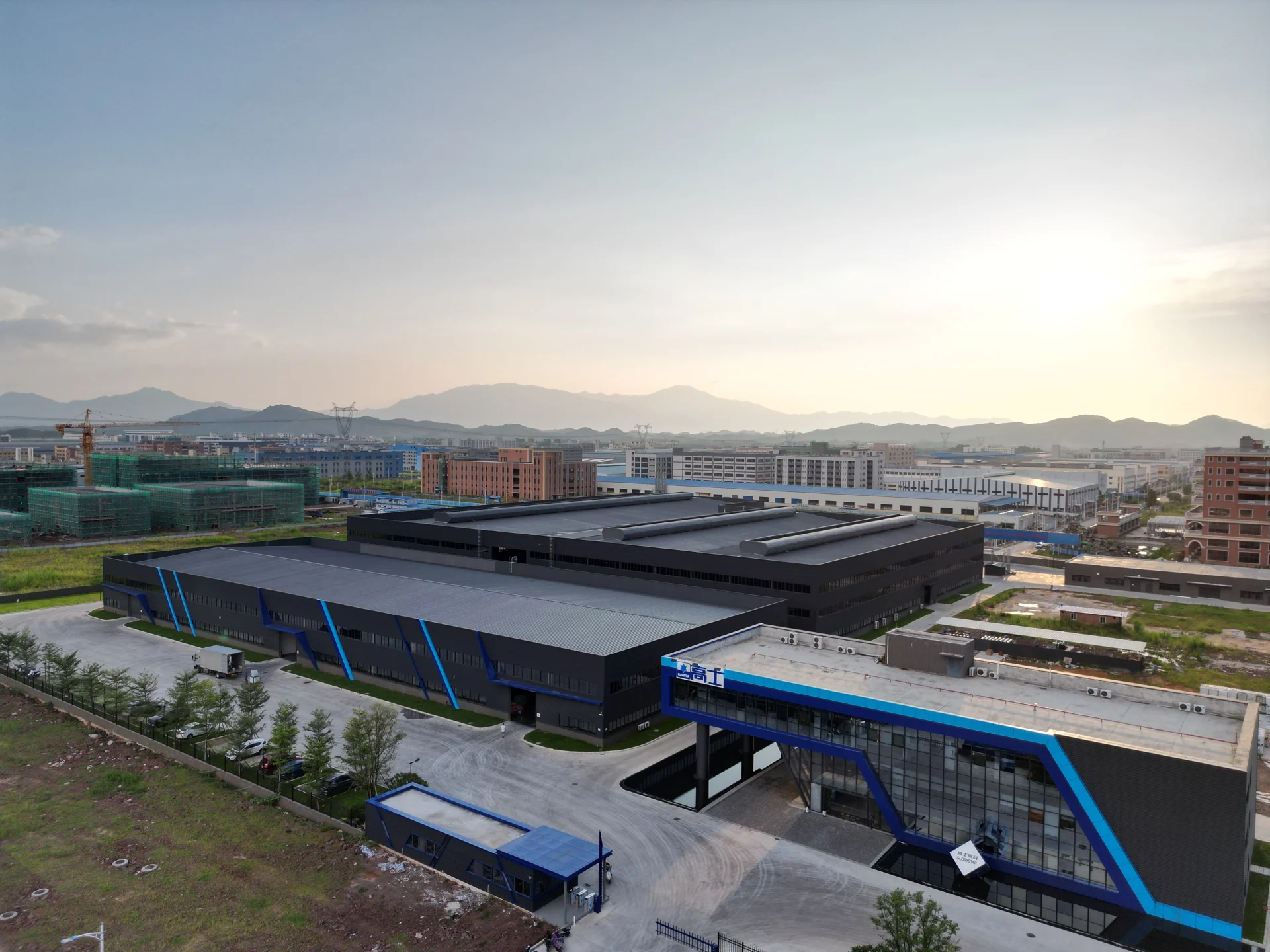
Glorystar Chemicals operates a 66,600 m² company-owned manufacturing base in Huaiji, Guangdong, with rated annual capacity exceeding 100,000 tonnes.
2. Understand What “Production Capacity” Actually Means
Factories frequently advertise annual production capacity.
Buyers should ask what the number represents.
There is an important difference between:
- rated installed capacity
- current actual output
- available capacity
- capacity for your specific formulation
- packaging-line capacity
- warehouse capacity
A factory may theoretically produce a large tonnage but still have a bottleneck in cartridge filling, artwork approval or packaging.
For a realistic supply assessment, ask:
- What is the expected production lead time for my product?
- How many cartridges or foil packs can be filled per shift?
- How do seasonal order peaks affect lead time?
- How much capacity is available for repeat orders?
- What is the contingency plan if one production line stops?
At Glorystar Chemicals, rated annual manufacturing capacity exceeds 100,000 tonnes, supported by automated production and 16 robotic palletising and packaging systems.
The useful discussion, however, should always move from factory-wide capacity to the production plan for the buyer’s actual SKU.
3. Look at Automation, but Do Not Treat Automation as a Quality Certificate
Automation can improve manufacturing efficiency and reduce manual variation.
Useful areas include:
- material handling
- dosing
- mixing
- filling
- carton handling
- palletising
- warehouse management
But buyers should not assume that an automated factory automatically makes a superior formulation.
Automation controls repetition.
Quality still depends on:
- formulation design
- raw material quality
- process parameters
- laboratory testing
- maintenance
- calibration
- operator discipline
The best factories combine automation with strong technical control.
4. Evaluate the R&D and Laboratory Capability
OEM sealant projects often require more than selecting an existing product from a catalog.
Different markets may require changes in:
- viscosity
- curing speed
- hardness
- color
- adhesion
- movement capability
- weather resistance
- packaging
- application temperature
- shelf-life expectations
The manufacturer should therefore have technical staff capable of discussing the application rather than simply asking:
“What price do you want?”
Glorystar Chemicals operates a 1,000 m² R&D laboratory supported by more than 50 chemical engineers for formulation development and product evaluation.
During a factory audit, buyers should ask to see:
- sample-development process
- laboratory equipment
- test records
- retained samples
- formulation approval procedure
- batch-release process
5. Understand Product and Safety Information
Technical and safety information serve different purposes and should correspond to the specific product.
Technical Data Sheet — TDS
The TDS should describe relevant technical characteristics such as:
- curing system
- color
- density
- tack-free time
- curing rate
- hardness
- tensile properties
- elongation
- movement capability where applicable
- application temperature
- service temperature
- recommended uses
- limitations
Not every product requires every item, but the document should reflect the actual grade being supplied.
Safety Data Sheet — SDS
Many buyers still use the older term MSDS, but Safety Data Sheet or SDS is now the more common title in GHS-based chemical communication.
The SDS addresses safety-related information including:
- product identification
- hazard classification
- composition information
- first aid
- fire-fighting
- accidental release
- handling and storage
- exposure protection
- transport
- regulatory information
The TDS and SDS serve different purposes.
A good-looking TDS cannot replace an SDS, and an SDS does not prove product performance.
6. Understand What Standards Actually Apply
A common sourcing mistake is asking:
“Does this silicone meet ASTM?”
There is no single universal “ASTM silicone certificate.”
The applicable standard depends on the product and application.
For general elastomeric building joint sealants, ASTM C920-18(2024) is the current active ASTM specification. It classifies sealants by type, grade, class and use and includes requirements related to properties such as movement performance.
For structural silicone glazing, ASTM C1184-23 specifically covers structural silicone sealants used to structurally adhere components in structural glazing systems.
In China, GB/T 14683-2017 — Silicone and Modified Silicone Sealants for Building remains an active national standard for relevant building sealants.
For structural silicone used in buildings, the current mandatory Chinese standard is GB 16776-2025 — Structural Silicone Sealants for Building, effective from February 1, 2026. The previous GB 16776-2005 edition has been withdrawn.
A responsible manufacturer should therefore ask:
- Which application?
- Which market?
- Which classification?
- Which test report?
rather than simply printing a long list of standards on the cartridge.
7. Distinguish Certificates From Test Reports
Buyers should also distinguish several different document types.
Management System Certificates
Examples may include:
- ISO 9001
- ISO 14001
- ISO 45001
These describe management systems.
They do not mean that every individual sealant automatically passes every performance standard.
Product Test Reports
These show the results of tests carried out on a specific product or submitted sample.
Always check:
- product name
- tested color
- test standard
- report number
- issuing laboratory
- issue date
- tested results
- whether the supplied formulation corresponds to the tested formulation
Declarations
A manufacturer declaration may connect a commercial product or production formulation to specific supporting documentation.
Declarations should be written carefully and should not exaggerate what a laboratory report actually proves.
8. Inspect Batch Consistency, Not Just the Golden Sample
Almost every factory can prepare a good sample when a valuable customer is evaluating suppliers.
The more important question is:
“Can they manufacture it consistently?”
A factory audit should examine how the supplier controls:
- formulation revision
- raw material batches
- weighing
- production parameters
- in-process inspection
- finished-product testing
- batch coding
- retained samples
- non-conforming products
Ask the factory to show production and QC records from more than one batch of the same product.
If possible, compare laboratory results between batches.
You are looking for controlled variation, not an impossible promise that every measurement will be mathematically identical.
9. Packaging Is Part of the OEM Product
For private-label sealants, the package is both a technical component and a sales tool.
Common formats include:
- plastic cartridges
- 400 ml foil packs
- 500 ml foil packs
- 600 ml foil packs
- squeeze tubes
- inner boxes
- master cartons
Cartridge
- body material
- cartridge color
- printed cartridge or label
- plunger
- nozzle
- fill weight
Foil Pack
- foil structure
- printing
- clip sealing
- net volume
- carton quantity
Artwork
- brand name
- product name
- color coding
- technical claims
- warnings
- barcode
- batch code
- manufacturing information
- language requirements
Cartons
- carton strength
- quantity per carton
- shipping marks
- pallet requirements
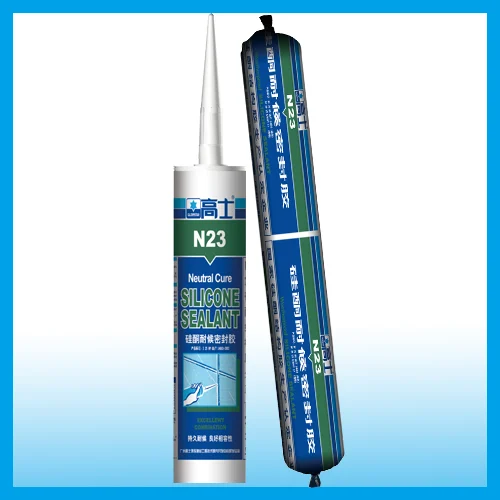
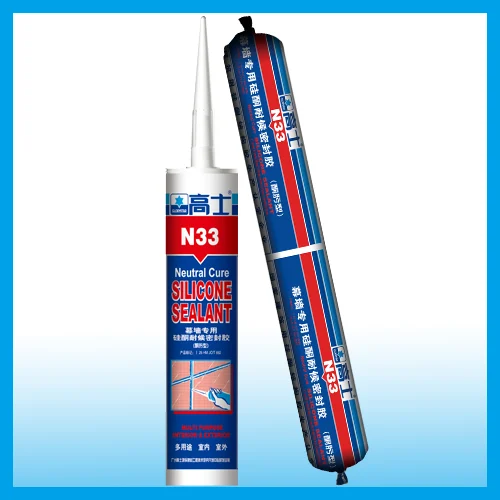
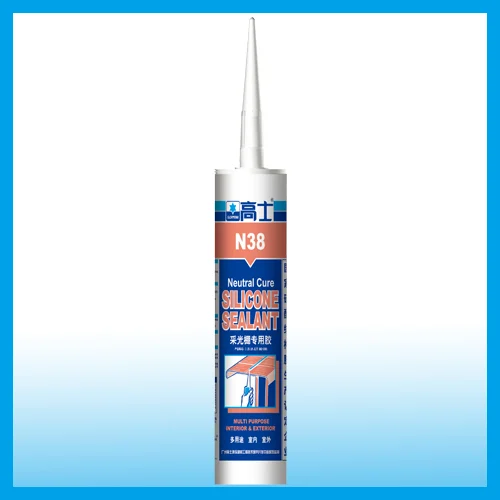
Glorystar Chemicals supports private-label projects across cartridges, foil packs, squeeze tubes and coordinated outer cartons, with packaging and brand-design support.
Packaging should be approved before mass production through a clear artwork-confirmation procedure.
10. Perform a Real Factory Audit
If the potential annual business is significant, visiting the factory is worth the cost.
Do not spend the whole visit in the showroom.
Raw material warehouse
Check supplier labels, storage conditions and batch identification.
Production workshop
Look at equipment condition, cleanliness, process control and production records.
Laboratory
Ask the technical team to explain actual test methods.
Filling area
Observe cartridge or foil-pack filling and sealing.
Packaging area
Check artwork control and batch coding.
Finished-goods warehouse
Look at stock identification, storage conditions and traceability.
Quality department
Ask how non-conforming material is handled.
The most revealing factory-audit question is often:
“Show me what happens when a batch fails QC.”
A factory that claims no batch has ever failed any test is not necessarily perfect.
It may simply have a very imaginative quality department.
11. Check Whether the Manufacturer Can Support Repeat Orders
A good OEM supplier should think beyond the first container.
Discuss:
- repeat-order lead time
- raw material continuity
- formulation change control
- artwork version control
- color consistency
- packaging supplier continuity
- retained samples
- complaint handling
- market feedback
- new product development
If a raw material must be replaced, how is the change reviewed?
If the cartridge supplier changes, how is compatibility checked?
If the customer changes artwork, how is the old version prevented from being used?
These details become important only after a brand starts growing, which is precisely when changing suppliers becomes expensive.
12. Price Matters, but Total Supply Risk Matters More
Silicone sealant is a competitive product.
Buyers should compare pricing.
But a difference of a few cents per cartridge can become irrelevant if the cheaper product causes:
- inconsistent curing
- leakage
- packaging failure
- customer complaints
- project rejection
- stock returns
- lost distributor confidence
The best OEM decision is therefore not automatically the cheapest supplier.
It is the manufacturer that can deliver the required performance, consistency, documentation, packaging and commercial terms at a sustainable cost.
A Practical OEM Supplier Checklist
Before approving a Chinese silicone sealant manufacturer, confirm:
- Real manufacturing site
- Production and filling capability
- Laboratory and technical team
- Raw material control
- Batch traceability
- Relevant product and safety information
- Appropriate ASTM / GB / local test support
- Formulation change control
- Packaging capability
- Artwork management
- Repeat-order consistency
- Export documentation
- Complaint-handling process
- Factory-audit access
If the supplier can answer all of these questions clearly, price becomes much easier to evaluate in context.
OEM and Private Label Manufacturing With Glorystar Chemicals
Glorystar Chemicals traces its sealant and adhesive business in China to 1996.
Our company-owned Huaiji production base integrates manufacturing, automated packaging, intelligent warehousing, R&D and laboratory evaluation.
For overseas distributors and brand owners, we support private-label and ODM projects covering silicone sealants, MS polymer adhesives, formulation development and packaging design.
A good OEM relationship should not begin with:
“What is your cheapest silicone?”
It should begin with:
“What product does my market actually need, and how can we manufacture it consistently?”
That is the foundation of a private-label product that can grow beyond the first order.
Learn more about our manufacturing base, OEM services, or contact Glorystar Chemicals to discuss your application.
Sources
These references describe the standards discussed above. They do not establish compliance for any specific product.