Neutral vs Acetoxy Silicone Sealant: How to Choose the Right Type and Evaluate Quality
“Neutral or acetoxy?”
It is one of the first questions buyers ask when selecting a silicone sealant.
It is also only the beginning.
The curing system influences odor, substrate compatibility and application, but it does not by itself tell you whether a product is high quality.
A cheap neutral silicone is not automatically better than a well-formulated acetoxy silicone.
And a sealant with very high tensile strength is not automatically the best sealant for a moving construction joint.
Professional product selection requires understanding both cure chemistry and performance requirements.
What Is Acetoxy Silicone Sealant?
Acetoxy silicone is a moisture-curing silicone system that releases acetic-acid-related by-products during curing.
Its characteristic vinegar-like odor is easy to recognize.
Acetoxy silicone is widely used in applications such as:
- glass
- ceramic
- selected non-porous surfaces
- general glazing
- household sealing
- selected sanitary applications
Its advantages can include:
- fast surface curing
- good adhesion to glass and ceramic
- established technology
- competitive cost
- simple general-purpose positioning
However, acetoxy chemistry is not suitable for every substrate.
The acidic curing by-products may make it inappropriate for certain metals, sensitive substrates or application environments.
Compatibility must therefore be confirmed rather than assumed.
What Is Neutral-Cure Silicone Sealant?
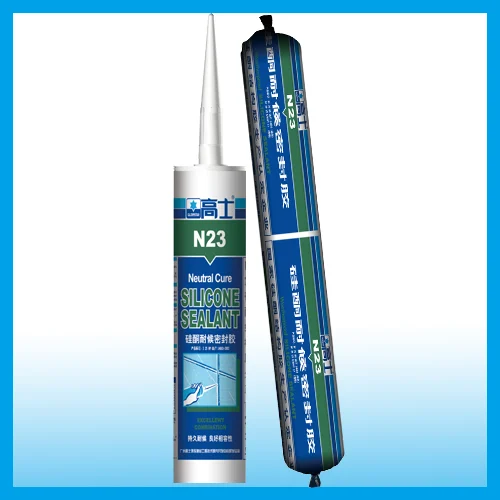
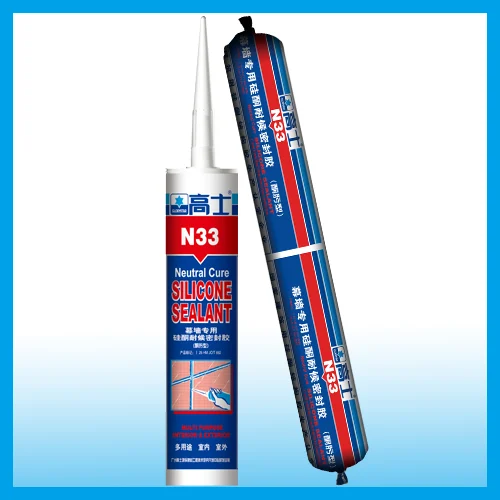
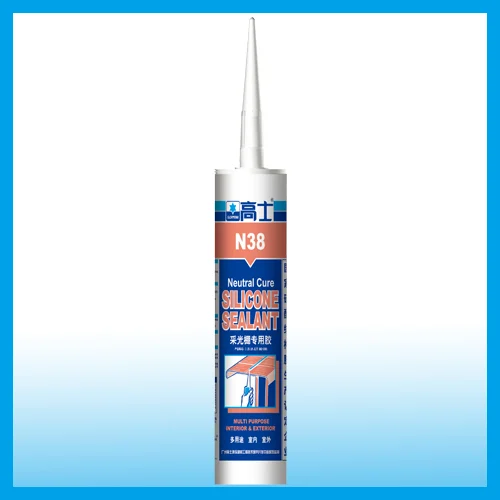
Neutral silicone cures without releasing the same acidic by-products associated with acetoxy systems.
Neutral-curing technology is widely used where broader substrate compatibility or construction performance is required.
Typical applications include:
- aluminium windows and doors
- coated metal
- exterior joints
- facade weather sealing
- construction joints
- selected stone applications
- curtain-wall applications
- industrial assembly
Different neutral formulations use different curing chemistries, so “neutral silicone” is still a broad product category rather than a single formulation.
A buyer should therefore ask what the sealant is designed to do instead of choosing only by the word neutral on the cartridge.
Neutral vs Acetoxy: A Practical Comparison
| Property | Neutral Cure | Acetoxy Cure |
|---|---|---|
| Cure by-product | Neutral-system by-products | Acetic-acid-related |
| Typical odor | Lower / formulation dependent | Strong vinegar-like odor |
| Glass adhesion | Generally good when formulated correctly | Often very good |
| Metal compatibility | Generally broader | Requires more caution |
| Construction applications | Widely used | More application-specific |
| Window & door use | Very common | Depends on substrate |
| Exterior weather sealing | Common in suitable grades | Depends on grade |
| Cost | Often higher | Often more economical |
| Product range | From GP to high-performance facade grades | Often GP, glazing and sanitary grades |
This table should be treated as a starting point. Actual performance depends on the specific formulation.
How Should Buyers Evaluate Silicone Sealant Quality?
The first mistake is judging quality by appearance.
Two cartridges can both look smooth, white and professional while performing very differently after curing.
A more useful evaluation looks at several properties together.
1. Tack-Free Time
Tack-free time describes how long the surface takes to become non-tacky after application.
It matters because the surface must eventually resist:
- light contact
- airborne dirt
- handling
- early environmental exposure
ASTM C679 is a recognized test method for tack-free time of elastomeric sealants. It also notes that a consistent and reproducible product will generally remain within a controlled tack-free-time range.
But faster is not always better.
An extremely fast skin can make tooling difficult in some applications.
The correct tack-free time depends on installation conditions and intended use.
2. Cure Depth
One-component silicone cures from the exposed surface inward as atmospheric moisture penetrates the material.
This means a thick joint does not instantly cure all the way through.
Cure depth should therefore be evaluated over time under controlled temperature and humidity.
A product may form a surface skin quickly while curing more slowly underneath.
For installers, that distinction matters.
3. Extrudability
A sealant that performs well in a laboratory but is extremely difficult to apply will create problems on site.
Extrudability is affected by:
- formulation
- temperature
- cartridge design
- storage age
- rheology
Buyers should test application at temperatures relevant to their market.
A product sold in Indonesia, Saudi Arabia, Russia and Northern Europe may encounter very different application conditions.
A single “easy to gun” judgment made at 23°C cannot describe every market.
4. Hardness
Sealant hardness is commonly expressed as Shore A or measured using appropriate sealant hardness methods.
ASTM C661 provides a standardized method for measuring indentation hardness of elastomeric-type sealants.
But hardness must be interpreted correctly.
A harder sealant is not automatically stronger.
A softer sealant is not automatically more flexible in every meaningful sense.
For a moving joint, the product needs a suitable balance between:
- elastic recovery
- adhesion
- cohesive strength
- movement accommodation
- hardness
Always compare hardness within the context of the application.
5. Tensile Strength
Tensile strength measures resistance to pulling forces under a defined test condition.
It is useful, but one number should never be used to rank all sealants.
A structural silicone and a weatherproof joint sealant may be designed for very different mechanical behavior.
A product can have high tensile strength but still be poorly suited to a continuously moving joint.
6. Elongation
Elongation indicates how far the material can extend before rupture under the specified test method.
Again, higher is not automatically better.
A sealant showing very high elongation in a tensile test does not automatically have high movement capability in a real building joint.
The two concepts are related but not interchangeable.
7. Movement Capability
Movement capability is one of the most misunderstood sealant specifications.
Buildings move because of:
- thermal expansion and contraction
- wind load
- structural movement
- settlement
- vibration
- material movement
A joint sealant must maintain adhesion and cohesion while accommodating this movement.
ASTM C719 evaluates adhesion and cohesion of elastomeric sealants under cyclic movement, including exposure to water and temperature change.
ASTM C920 then classifies qualifying sealants by type, grade, class and use. The current active edition is ASTM C920-18(2024).
Therefore:
600% elongation on a TDS does not mean the product is automatically an ASTM C920 Class 50 sealant.
That distinction is important for professional procurement.
8. Adhesion
A silicone sealant ultimately succeeds or fails at an interface.
Important substrates can include:
- glass
- anodized aluminium
- powder-coated aluminium
- concrete
- mortar
- ceramic
- PVC
- painted metal
- natural stone
A product that bonds well to glass may perform differently on powder-coated aluminium.
Surface treatment can also vary between suppliers.
For important projects or OEM applications, adhesion should therefore be evaluated on the actual substrate wherever possible.
9. Cohesive Failure vs Adhesive Failure
When a sealant joint fails, understanding the failure mode is useful.
Adhesive Failure
The sealant separates from the substrate.
Possible causes include:
- unsuitable formulation
- contaminated surface
- incompatible substrate
- incorrect primer
- poor installation
Cohesive Failure
The sealant itself tears internally while remaining bonded to the substrate.
Neither observation should be interpreted without considering the test method and application.
The objective is not simply to make the material “as strong as possible.”
The objective is to create a joint system appropriate for the required movement and load.
10. Weather Resistance and UV Exposure
Exterior silicone is expected to perform under:
- sunlight
- UV exposure
- heat
- rain
- humidity
- temperature cycling
Silicone chemistry is widely used for exterior sealing because of its weather resistance, but not every silicone formulation is designed for the same service conditions.
A basic indoor or household silicone should not automatically be treated as a high-performance facade product simply because both contain silicone polymer.
11. Weight Loss and Shrinkage
Sealant formulations can lose volatile components during curing and aging.
Excessive shrinkage can affect:
- joint dimensions
- appearance
- adhesion
- long-term performance
For professional procurement, buyers should look beyond initial extrusion feel and consider how the sealant behaves after complete cure and aging.
A cartridge that feels wonderfully soft because of a high level of low-cost processing components may not necessarily deliver the best long-term joint performance.
12. Shelf Life
Shelf life is particularly important for moisture-curing sealants.
Performance can be affected by:
- packaging barrier properties
- storage temperature
- moisture ingress
- formulation stability
- cartridge sealing
- production date
A product may leave the factory in perfect condition but deteriorate after prolonged exposure to high warehouse temperatures.
This matters especially in hot markets and long supply chains.
OEM buyers should therefore discuss:
- expected storage temperature
- shipping route
- container conditions
- warehouse climate
- required shelf life
Shelf-life testing should reflect the actual packaging used for production.
13. Packaging Can Affect Product Stability
The sealant and the cartridge form one system.
One-component silicone must remain protected from moisture until use.
Therefore buyers should evaluate:
- cartridge material
- plunger seal
- nozzle
- foil-pack barrier
- clip integrity
- filling cleanliness
- storage conditions
For private-label products, changing the packaging supplier without evaluating compatibility can create problems even when the chemical formulation remains unchanged.
14. What Does ASTM C920 Actually Tell a Buyer?
ASTM C920 is widely referenced in international construction-sealant procurement.
The current active edition, ASTM C920-18(2024), covers elastomeric joint sealants used for sealing, caulking and glazing in building and related construction applications and classifies products by type, grade, class and use.
That means buyers should not accept a vague statement such as:
“Meets ASTM C920.”
Ask for the actual classification.
For example:
- Type
- Grade
- Class
- Use designation
And request the supporting test documentation where relevant.
15. Structural Silicone Is a Different Discussion
Structural glazing is not simply “better weatherproof silicone.”
Structural silicone performs a safety-critical bonding function in a structural glazing system.
ASTM C1184-23 specifically addresses structural silicone sealants and includes requirements involving properties such as rheology, extrudability, hardness, heat aging, tack-free time, tensile adhesion and shelf life.
In China, the current mandatory standard for structural silicone sealants for buildings is GB 16776-2025.
If a project requires structural glazing, buyers should evaluate the correct structural grade and supporting technical documentation rather than substituting an ordinary construction silicone.
16. So Which Is Better: Neutral or Acetoxy?
There is no universal winner.
Choose acetoxy silicone when:
- the intended substrates are compatible
- the application suits acetoxy chemistry
- fast curing and glass adhesion are useful
- the market requires an economical general-purpose product
Choose neutral silicone when:
- broader substrate compatibility is required
- aluminium, coated metal or construction materials are involved
- exterior weather sealing is required
- the application calls for a more specialized construction formulation
But after choosing the curing system, continue asking:
- What hardness?
- What movement class?
- What adhesion?
- What cure speed?
- What packaging?
- What weathering requirement?
- What service environment?
That is where real product selection begins.
Evaluating Silicone Sealant With Glorystar Chemicals
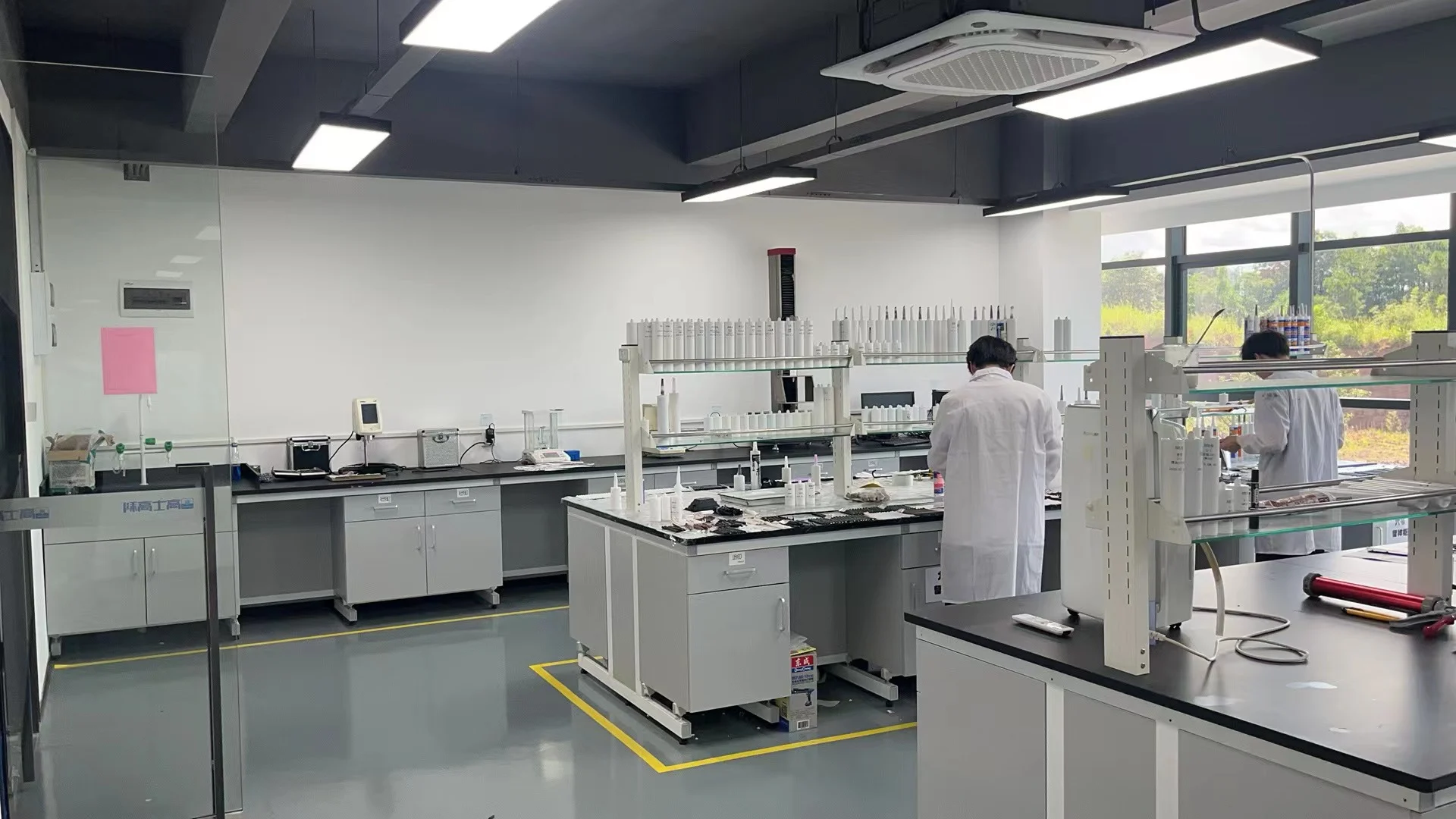
Glorystar Chemicals develops and manufactures silicone sealants and MS polymer adhesives at its Huaiji manufacturing base in Guangdong, China.
Our R&D and manufacturing teams work with distributors and private-label customers to select or develop products according to the intended substrate, climate, market position and application.
For OEM buyers, the best product is rarely defined by a single number.
The objective is to build a balanced specification that performs reliably in the real application and can be manufactured consistently from batch to batch.
When comparing samples, do not ask only:
“Which sealant stretches the most?”
Ask:
“Which product has the right combination of adhesion, movement, curing, hardness, durability and application performance for my market?”
That is a much more useful definition of quality.
Learn more about our manufacturing base, OEM services, or contact Glorystar Chemicals to discuss your application.
Sources
These references describe the standards discussed above. They do not establish compliance for any specific product.