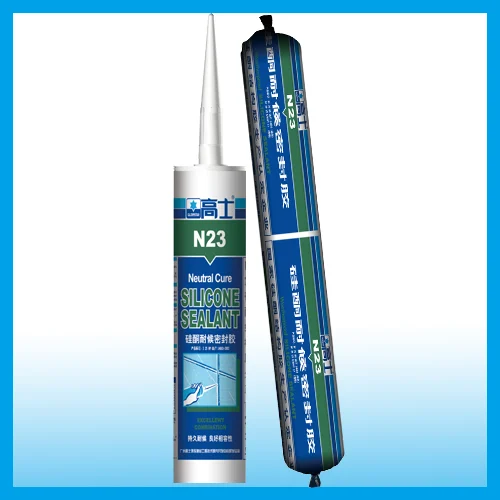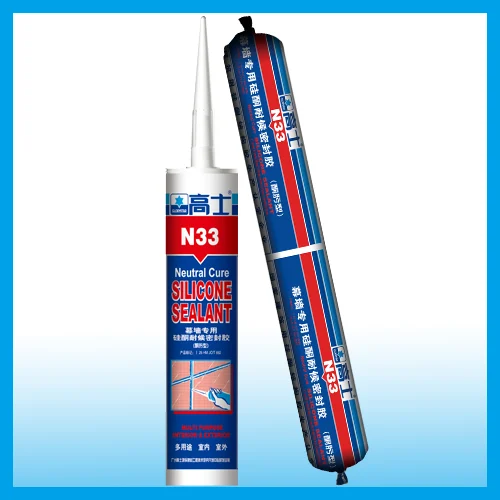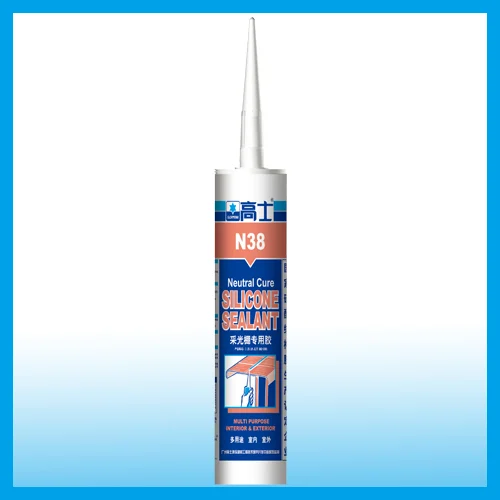
How Silicone Sealant Is Manufactured: Raw Materials, Production Process and Batch Quality Control
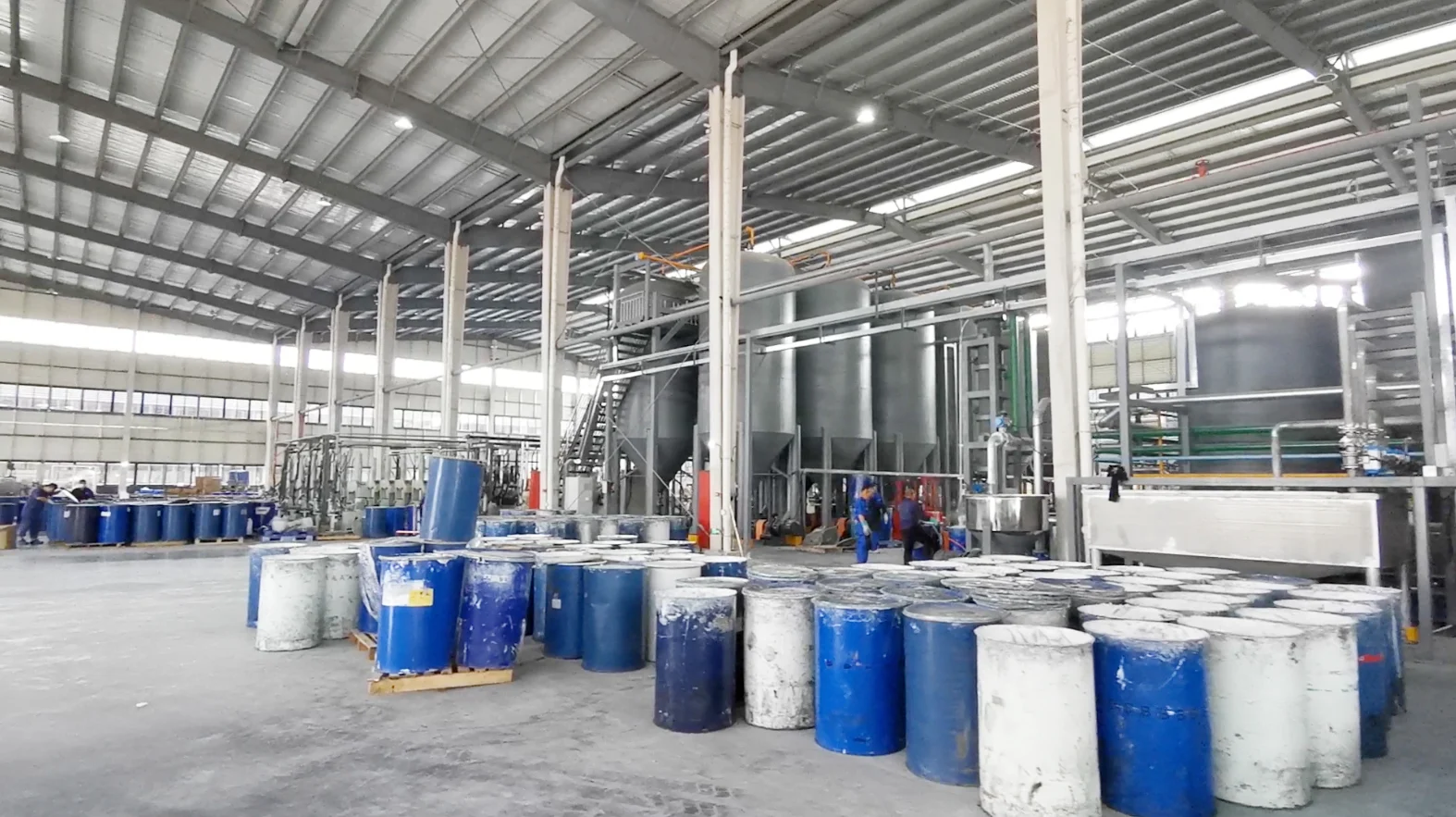
A cartridge of silicone sealant may look simple, but consistent performance depends on far more than filling a tube with a sticky material.
For professional manufacturers, silicone sealant production is a controlled chemical manufacturing process. Raw material selection, moisture control, mixing, vacuum processing, formulation accuracy, packaging and laboratory testing all influence how the final sealant extrudes, cures, adheres and performs over time.
For distributors and private-label brands, understanding this process is useful for one reason: two products that look almost identical in a cartridge can behave very differently after six months in a warehouse or several years in a building joint.
This article explains how one-component silicone sealant is typically manufactured and what buyers should look for when evaluating production quality.
1. The Main Raw Materials in Silicone Sealant
Silicone Polymer
The backbone of the formulation is silicone polymer.
In the Chinese silicone industry, buyers may hear the term “107 silicone polymer”, commonly referring to hydroxyl-terminated silicone polymer used as a primary base material in RTV silicone formulations.
The polymer has a major influence on the elasticity, durability and mechanical behavior of the cured sealant.
The quality and consistency of the polymer therefore matter greatly. A manufacturer should not evaluate raw materials only by price. Viscosity consistency, moisture content, supplier stability and batch-to-batch variation all affect downstream production.
Fillers
Fillers are used to control mechanical properties, rheology, density and cost.
Common filler systems may include calcium carbonate, silica and other mineral materials depending on the required performance.
The important issue is not simply how much filler is used.
Particle size, surface treatment, moisture content and dispersion all affect the final product.
Poor dispersion can lead to inconsistent extrusion, weak mechanical properties or unstable appearance.
Processing Fluids and Plasticizing Components
Certain formulations use silicone fluids or other compatible processing components to adjust viscosity and application characteristics.
Their type and proportion must be controlled carefully.
A sealant that is very easy to extrude is not automatically better. Excessive use of low-cost extending materials may reduce mechanical performance, durability or dimensional stability.
Professional product development therefore aims for a balance between application feel, performance and target cost.
Crosslinking Agents
One-component silicone sealant remains usable inside the sealed cartridge but begins curing after exposure to atmospheric moisture.
This behavior depends on the crosslinking system.
The chemistry determines whether the product is classified as acetoxy cure or neutral cure, and it influences curing behavior, odor, substrate compatibility and application range.
Adhesion Promoters
Silicone needs to bond to many different surfaces:
- glass
- aluminium
- coated aluminium
- ceramic
- concrete
- stone
- PVC
- metals
- painted substrates
Adhesion-promoting components help the formulation develop a reliable bond to the intended substrates.
There is no universal formulation that is ideal for every material. This is why application-specific formulation and substrate testing are important.
Catalysts and Functional Additives
Catalysts control the curing reaction.
Other additives may be used to influence rheology, color, storage stability, mildew resistance or specific application properties.
Pigments are added for colors such as white, black, grey or customized shades.
The complete formulation must remain chemically balanced. Small changes in one component can affect cure speed, storage stability, adhesion or mechanical performance.
2. Incoming Raw Material Control
Manufacturing quality starts before production begins.
A professional silicone sealant factory should establish incoming inspection procedures for critical raw materials.
Depending on the material, checks may include:
- supplier Certificate of Analysis
- appearance
- viscosity
- moisture content
- density
- purity or active content
- batch identification
- storage condition
Critical materials should also be traceable to their supplier batch.
This becomes important when a finished product shows an unexpected change. Without raw material traceability, identifying the cause becomes much more difficult.
At Glorystar Chemicals, raw material control is integrated with manufacturing and laboratory evaluation at the company’s Huaiji production base.
3. Base Material Mixing and Dispersion
Once approved materials are released to production, accurately weighed ingredients are transferred into industrial mixing equipment.
The first stage usually focuses on creating a uniform base material.
Silicone polymer, fillers and selected processing components must be thoroughly dispersed.
This stage sounds simple, but filler dispersion is one of the parts of manufacturing where equipment and process control matter.
An uneven mixture may produce:
- inconsistent viscosity
- poor extrusion
- surface defects
- unstable mechanical properties
- differences between cartridges from the same production batch
Industrial mixing equipment provides controlled shear and mixing conditions to create a homogeneous material.
4. Vacuum Processing and Moisture Control
One-component silicone sealant is moisture-reactive.
That creates an obvious manufacturing problem: the product must not begin curing inside the production equipment or cartridge.
For this reason, moisture control is essential during manufacturing.
Vacuum processing helps remove entrapped air and unwanted volatile or moisture-related components from the mixture.
The process also helps create a dense and uniform sealant without unnecessary air pockets.
Temperature, vacuum level, processing time and material condition must be controlled according to the formulation and production procedure.
5. Addition of Reactive Components
After the base material has been properly prepared, reactive components such as crosslinkers, adhesion promoters and catalysts are incorporated under controlled conditions.
This stage determines important characteristics including:
- curing mechanism
- skin formation
- adhesion
- storage stability
- final mechanical properties
Because these components may react with moisture, handling conditions are particularly important.
The formulation must also be accurately reproduced.
In an OEM project, a successful laboratory sample is only useful if the production team can reproduce the same formulation consistently in commercial batches.
This is where production control becomes just as important as formulation development.
6. Final Vacuum De-Airing and Homogenization
Before filling, the material undergoes final homogenization and vacuum processing.
The objective is to deliver a consistent sealant to the filling line with controlled appearance, viscosity and density.
At this stage, in-process samples can be checked before the material is released for packaging.
Typical in-process observations may include:
- appearance
- color
- consistency
- extrusion behavior
- density
- preliminary curing behavior
If the material does not meet the required specification, it should not simply continue to filling because the packaging line is waiting.
Quality control has to remain independent from production pressure.
7. Filling Into Cartridges or Foil Packs
The prepared sealant is transferred to filling equipment.
Common packaging formats include:
- plastic cartridges
- aluminium-compatible or barrier cartridges where required
- 400 ml foil packs
- 500 ml foil packs
- 600 ml foil packs
- squeeze tubes for selected products
During filling, manufacturers need to control fill weight, sealing, nozzle components and packaging cleanliness.
The cartridge is not merely a marketing container.
For moisture-curing materials, packaging integrity is part of product performance because moisture ingress during storage can shorten shelf life or cause premature curing.
8. Automated Packaging and Palletising
Large-scale production also requires reliable downstream handling.
Glorystar Chemicals operates a 66,600 m² company-owned manufacturing base in Huaiji, Guangdong, with rated annual manufacturing capacity exceeding 100,000 tonnes. The facility is supported by 16 robotic palletising and packaging systems, a 6,000 m² intelligent warehouse and a 1,000 m² R&D laboratory.
Automation does not replace quality control, but it helps reduce unnecessary manual variation in repetitive packaging and handling processes.
For overseas customers, this becomes increasingly important as order volumes grow.
A factory may be able to produce one good sample manually. The real question is whether it can reproduce thousands of cartridges with consistent product, fill weight, packaging and identification.
9. Finished Product Quality Control
Finished-product testing depends on the product specification and intended application.
A professional laboratory may evaluate properties such as:
Appearance and Color
The sealant should match the approved product and color standard without visible contamination or unexpected separation.
Density or Specific Gravity
Density can help monitor formulation consistency.
Unexpected changes may indicate variation in raw materials, weighing or mixing.
Extrudability
The sealant must be practical to apply with the intended cartridge and application equipment.
Extrusion behavior is especially important in different climates because temperature can significantly affect application feel.
Tack-Free Time
Tack-free time indicates how quickly the surface reaches a non-tacky condition after exposure to air.
ASTM C679 is one recognized method used to evaluate tack-free time for elastomeric sealants. ASTM notes that consistency in tack-free time can also be useful as a quality-assurance indicator.
Cure Depth
For one-component moisture-curing sealants, cure progression helps confirm that the formulation is reacting normally.
Hardness
Hardness affects how the cured sealant responds under load and movement.
ASTM C661 provides a laboratory method for measuring indentation hardness of elastomeric sealants.
Tensile Strength and Elongation
Mechanical testing helps characterize how the cured material stretches and resists tensile loading.
The correct target depends on the product application. Higher tensile strength alone does not automatically mean a better construction sealant.
Adhesion
Adhesion should be evaluated on substrates relevant to the intended application.
A window sealant, facade sealant, stone sealant and sanitary sealant may require very different substrate evaluations.
Movement Performance
For higher-performance construction sealants, movement capability becomes critical.
ASTM C719 evaluates adhesion and cohesion under cyclic movement, water immersion and temperature change and is one of the tests associated with building-joint performance.
10. Why Batch Testing Matters
Passing a laboratory test once does not prove that every future shipment will be identical.
For professional buyers, batch consistency is often more important than an impressive first sample.
A batch-control system should connect:
raw material batch → production batch → laboratory result → filling date → packaging code → finished goods
This creates traceability.
If a customer reports a problem months later, the manufacturer can trace the production batch and review the associated manufacturing and testing records.
Depending on the product and customer specification, batch verification may include selected physical properties, curing characteristics, appearance, density and application tests.
Representative samples can also be retained for future comparison.
The exact testing plan should match the product risk and application. Structural glazing silicone obviously requires a different control level from a basic general-purpose household sealant.
11. Batch Consistency Is What Separates a Sample From a Supply Program
When sourcing silicone sealant, buyers often focus heavily on the first sample.
But a successful OEM relationship requires more:
The first container should perform like the approved sample.
The fifth container should perform like the first.
A product manufactured next year should remain within the agreed specification.
That is why buyers should evaluate not only the formulation, but also:
- raw material controls
- production procedures
- laboratory capability
- batch records
- retained samples
- traceability
- equipment
- packaging controls
- warehouse conditions
A good formulation is the beginning.
A controlled manufacturing system is what turns that formulation into a reliable commercial product.
Manufacturing Silicone Sealant With Glorystar Chemicals
Glorystar Chemicals traces its roots to Guangzhou in 1996 and develops and manufactures silicone sealants and MS polymer adhesives for construction, interior and industrial applications.
Our Huaiji manufacturing base combines production, automated packaging, warehousing, formulation development and laboratory evaluation.
For distributors and private-label brands, our team can support product selection, sample development, customized formulations and packaging programs based on the intended market and application.
When evaluating a silicone sealant manufacturer, do not ask only:
“What is your price per cartridge?”
Also ask:
“How do you make sure the next batch performs like the sample I approved?”
That question reveals much more about the factory behind the product.
Learn more about our manufacturing base, OEM services, or contact Glorystar Chemicals to discuss your application.
Sources
These references describe the standards discussed above. They do not establish compliance for any specific product.